Extension Cords: A Quiet Safety Upgrade for Outdoor Projects
Cord gauge, rating, length, and environment must match the connected tool and its instructions.
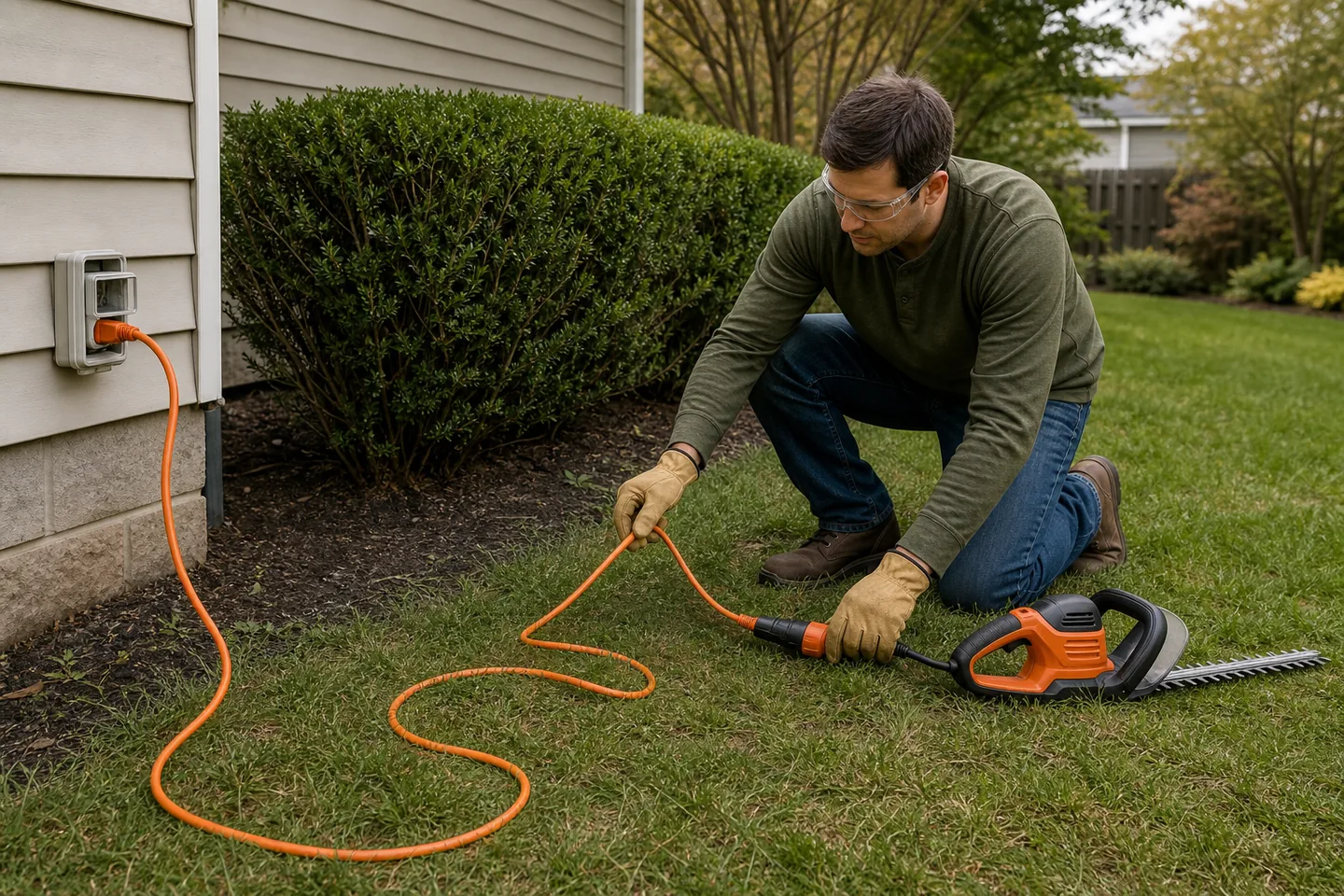
An original editorial scene created for GIB Tool Desk. Products shown are unbranded and illustrative.
A trimmer reaches the far fence only with an extension, while damp grass and a tightly coiled cord add risks that are easy to overlook.
Decision snapshot
- Job to solve
- Choose an outdoor-rated cord with the correct gauge for load and distance. Fully unwind it, protect connections, and use required ground-fault protection.
- Best fit
- Homeowners powering compatible corded tools around yards, garages, and workshops.
- Main compromise
- Heavier-gauge cords support demanding loads over distance but cost more and are harder to carry.
The real-life problem this purchase should solve
Choose an outdoor-rated cord with the correct gauge for load and distance. Fully unwind it, protect connections, and use required ground-fault protection.
Before opening a retailer tab, write down the exact place, person, and repeated task this purchase is meant to serve. That small step prevents a premium feature from becoming a substitute for fit.
What is worth paying for
Pay for materials suited to the working environment, handles and controls usable with gloves, and instructions that are easy to understand. The most useful version fits the work area, feels controlled in hand, and can be maintained without hunting for obscure parts.
- materials suited to the working environment
- handles and controls usable with gloves
- published safety and maintenance instructions
- replacement parts that remain easy to source
Homeowners powering compatible corded tools around yards, garages, and workshops.
The tradeoff: Heavier-gauge cords support demanding loads over distance but cost more and are harder to carry.
What to skip
Start by rejecting any option that makes the central compromise harder to accept: Heavier-gauge cords support demanding loads over distance but cost more and are harder to carry. Also skip vague performance promises, poorly documented compatibility, and bundles whose extra pieces do not serve the project described here.
Prices, bundles, availability, and model details change. Compare current published information and the latest manual before buying. Follow the manufacturer, applicable public-authority guidance, and a qualified professional when a task exceeds your skills or involves structural, electrical, vehicle, or work-at-height risk.
A five-minute buying checklist
- Measure the work area, access path, and storage space
- Confirm the model is a practical fit for this use case: Homeowners powering compatible corded tools around yards, garages, and workshops.
- Check included parts, compatible accessories, and the current manual
- Decide whether this stated compromise is acceptable: Heavier-gauge cords support demanding loads over distance but cost more and are harder to carry.
- Save the receipt and the latest instructions in one place.
Our bottom line
Cord gauge, rating, length, and environment must match the connected tool and its instructions. A credible shortlist should address this project requirement: Choose an outdoor-rated cord with the correct gauge for load and distance. Fully unwind it, protect connections, and use required ground-fault protection. It should also make the main compromise easy to evaluate: Heavier-gauge cords support demanding loads over distance but cost more and are harder to carry.
Frequently asked question
What deserves one final check before ordering?
Choose an outdoor-rated cord with the correct gauge for load and distance. Fully unwind it, protect connections, and use required ground-fault protection. Use that requirement to eliminate poor fits first. If two options still qualify, prefer the one with clearer instructions, easier upkeep, and a return policy that gives you time to verify fit.